Much ado has been made lately about the HALO trade. "HALO" stands for heavy assets, low obsolescence. The term, coined by Ritholtz Wealth Management CEO Josh Brown in a Substack post on February 8, 2026, refers to companies with physical, tangible assets that are not easily displaced by artificial intelligence. On March 24th, Goldman Sachs jumped on the HALO bandwagon and published a research note called “The HALO effect: Heavy Assets, Low Obsolescence in the AI era”, suggesting a framework to identify “HALO” companies that are less exposed to technological obsolescence. Artificial intelligence is placing dual pressures on businesses: disrupting “capital light” business models and capital structures.
AI disrupting the new economy
AI is disrupting many of the traditional new-economy business models that have dominated over the past decade, such as software as a service (SaaS) platforms, many of which are now seeing their competitive moats threatened. The sharp de-rating of software platform shares in recent months does not reflect a collapse in near-term fundamentals — earnings are still strong and margins remain high — but rather a re-evaluation of their long-term survival.
Capital light is becoming capital intensive
AI is also simultaneously turning some of the market’s most iconic “capital light” winners into “capital intensive” industrial companies. To provide the foundational models and compute capacity needed for AI, the five US hyperscalers: Amazon (AWS), Microsoft (Azure), Alphabet (GCP), Meta, and Oracle (OCI), have embarked on an unprecedented capital spending spree.
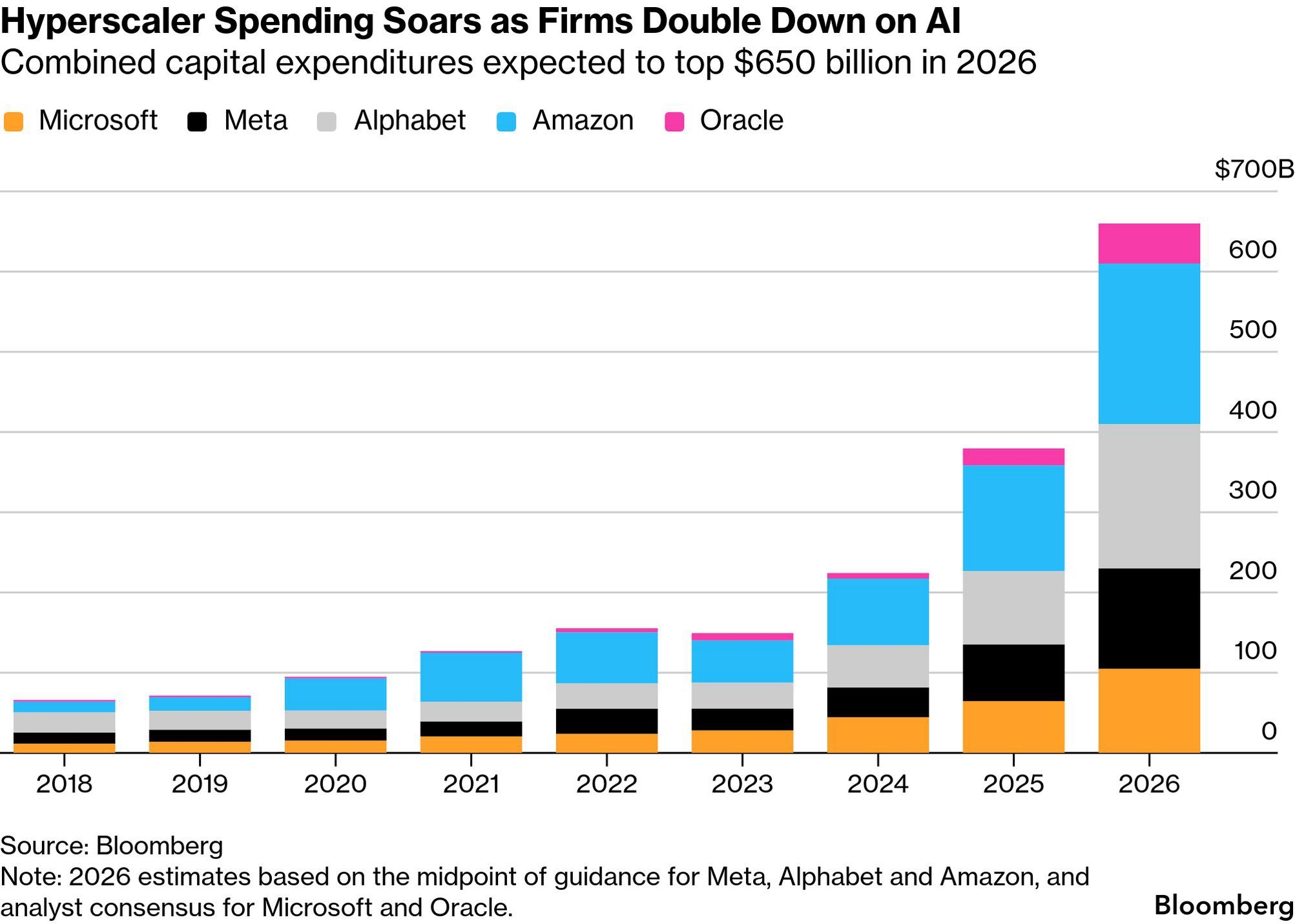
Combined capital expenditures are expected to top $650 billion in 2026, according to Bloomberg estimates. The AI infrastructure buildout marks one of the fastest and largest capex cycles in tech history. In addition, to help fund the AI arms race, once cash rich companies are now issuing debt. In March, BofA Global Research raised its 2026 forecast for investment-grade debt sales by hyperscalers by 25% to $175 billion, with an expectation for $65 billion of new issuance this year.
HALO index approach
Teaming up with Matt Tuttle, the CEO of Tuttle Capital Management, the Tuttle Capital Heavy Asset Low Obsolescence Index (HALX) is designed to capture companies that exhibit specific “HALO” characteristics: heavy assets, low obsolescence, and lower AI disruption. The index selects the top 40 constituents from the VettaFi US Equity Large-Cap 500 Index (SNR500) based on the highest HALO Composite score and weights them equally, subject to sector concentration constraints.
To learn more about the index and its methodology, click here. The index will be tracked by the Tuttle Capital Heavy Assets Low Obsolescence ETF (HALX) which is scheduled to become effective May 2026.