- Accurate attribution is no longer optional.
- As measurement techniques evolve, the ability to pinpoint exactly what drives conversion allows issuers to gain a competitive advantage.
- Without an attribution strategy, firms face inefficient spend and a clouded view of their true performance.
The challenges facing marketers
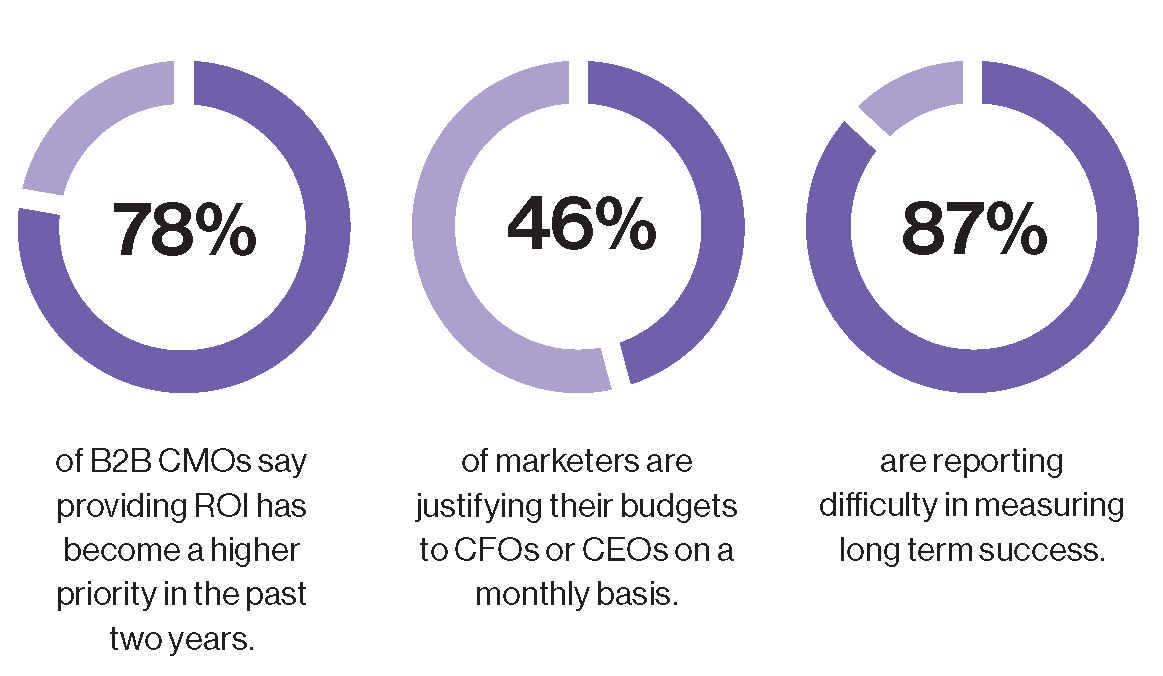
Marketers today face intensifying ROI pressure. In asset management specifically, where falling expense ratios and crowded markets are squeezing budgets, the ability to prove value is no longer optional. In B2B marketing, bottom funnel metrics can tie more closely to conversion, like webcast attendance and case study downloads. But the higher up the funnel you go, the harder attribution becomes. Brand awareness grows slowly and compounds, which means the value is real but not always immediately measurable. Lower funnel sales are easier to connect to conversion about it, but prioritizing them at the expense of brand building can result in hamstringing growth opportunities.
LinkedIn’s B2B ROI Impact Research1
Given that B2B sales cycles are longer than B2C sales cycles, telling the story of how any given marketing tactic is impacting the final purchase decision is daunting. In a recent virtual event, Ozzie Solares, Global Head of Integrated Media & Analytics at J.P. Morgan Asset & Wealth Management, noted “This is a challenging space. The landscape isn’t exactly doing us any favors.”
Some of these challenges in today’s landscape include:
Fragmented data: Data is everywhere, but it’s often trapped in silos. The real challenge for asset managers is identifying the most impactful data points and weaving them together to reveal a clear picture of performance.
Media spend takes time to show value: In today’s environment, where leadership is looking at ROI monthly, long term solutions are often tabled in favor of short-term tactical bets, creating additional challenges down the road.
Organizational data maturity: Data has become increasingly important, but not all organizations have fully evolved their data processes and governance. Smarter attribution frameworks can help address these challenges. Marketing results take time to manifest and marketers who lean into better attribution methodologies will have an easier time justifying additional investments to leadership.
1The ROI Challenge in B2B Marketing - And How AI is Changing the Game, LinkedIn, March 2025.